
1. Founder Introduction:

張政豐 博士
Dr. Chang, Cheng-Feng
A Civil Engineering PhD Perspective on Solving Modern Construction Challenges
Technical Philosophy
“Waterproofing is not merely a coating issue—it is an engineering challenge of structural durability.”
JAS goes beyond supplying waterproofing materials. We deliver solutions for construction risk management.
In the face of labor shortages and increasingly extreme climate conditions, we support architects and engineers in adopting science-based standards, enabling construction to rely more on engineering principles rather than manpower, and to create longer-lasting, more sustainable landmark structures for future generations.
。Education & Professional Experience
Education
Ph.D. in Civil Engineering, National Cheng Kung University (NCKU)
Professional Qualifications
Licensed Professional Civil Engineer
Award-Winning Engineer, Public Construction Golden Quality Award
Technical Committee Member, CNS National Standards for Civil & Building Engineering
Professional Experience
28 years of engineering practice, dedicated to transforming materials science into practical engineering solutions that address labor shortages and enhance structural durability.
2. Three Core Pillars of Modern Engineering
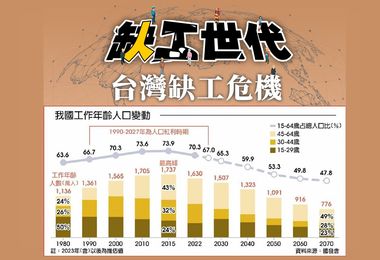
Savior of Labor Shortage
『Replacing Labor Dependency with Materials Science』Traditional waterproofing methods involve complex, multi-step procedures—such as primer, intermediate coating, top coating, and curing—and rely heavily on the skill level and workmanship consistency of individual workers.
The JAS system simplifies waterproofing into a standardized and science-driven process:
Automated Application
JAS-UHPWA-101 is directly added at ready-mix concrete plants, enabling waterproofing to be completed simultaneously during concrete placement—without occupying any on-site labor time.
Rapid Protection
JAS-SUPERWA-201 utilizes high-pressure spraying for fast application, significantly reducing construction time and dependence on highly skilled labor.
Sustainability &(Decarbonization)
『Durability Is the Ultimate Form of Sustainability』n the construction industry, the largest sources of carbon emissions come from demolition, reconstruction, and repeated repair works.
The JAS system addresses this challenge through sustainability-driven engineering:
Extended Service Life
JAS solutions are designed to last as long as the structure itself, eliminating the need to remove and reapply waterproofing layers every 5–10 years—thereby significantly reducing construction waste and carbon emissions.
Non-Toxic & Eco-Friendly
All JAS products are water-based, non-toxic, and low in VOCs, aligning with green building standards and the United Nations Sustainable Development Goals (SDGs).
Risk Management Design
『BS 8102 Dual Protection—Eliminating Single-Point Failure』In accordance with British Standard BS 8102, we do not rely on the perfection of a single waterproofing layer. Instead, we establish a redundant system designed to minimize risk:
Type B (Structural Protection)
The structure itself is made watertight, serving as the first line of defense.
Type A (External Protection)
A surface-applied nano-crystalline layer provides the second line of defense.
Even if the surface layer is damaged, the structure remains watertight.
Even if micro-cracks develop within the structure, the surface layer continues to resist water penetration.
Dual protection. Maximum reliability. Minimal risk.
3. Zoning Design Specification
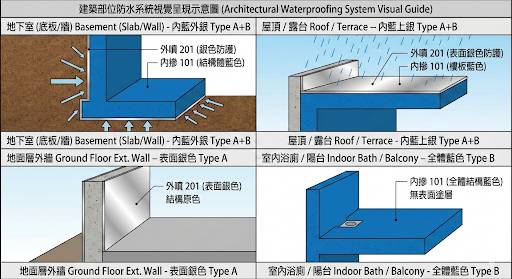
Illustration of Waterproofing Systems for Different Building Areas:
Zone A:
Basements & Foundations — Extremely High-Risk Management
Configuration Strategy: Type A + Type B (Inner Blue / Outer Silver)
Structural Body (Type B):
JAS-UHPWA-101 is integrally mixed into the concrete, providing full cross-section water resistance.
Water-Exposed Surface (Type A):
JAS-SUPERWA-201 is applied by external spraying to protect against water ingress and chemical attack.
Zone B:
Roofs & Terraces — Durability and Maintenance Management
Configuration Strategy: Type A + Type B
Slab (Type B):
JAS-UHPWA-101 is integrally mixed into the concrete to provide inherent waterproofing.
Surface Layer (Type A):
JAS-SUPERWA-201 is externally applied to deliver UV resistance and superhydrophobic protection.
Zone C:
Exterior Walls — Aesthetics and Breathability Management
Configuration Strategy: Type A Surface Protection
Application:
JAS-SUPERWA-201 is spray-applied to provide a breathable waterproof layer that prevents blistering, peeling, and delamination.
Zone D:
Bathrooms & Wet Areas — Interlayer Moisture Risk Control
Configuration Strategy: Type B Full Structural Protection (All Blue)
Performance Advantage:
Even if the finishing or waterproofing layers fail, the structural concrete remains fully watertight, preventing leakage and interlayer moisture-related issues.
4. Material Specifications
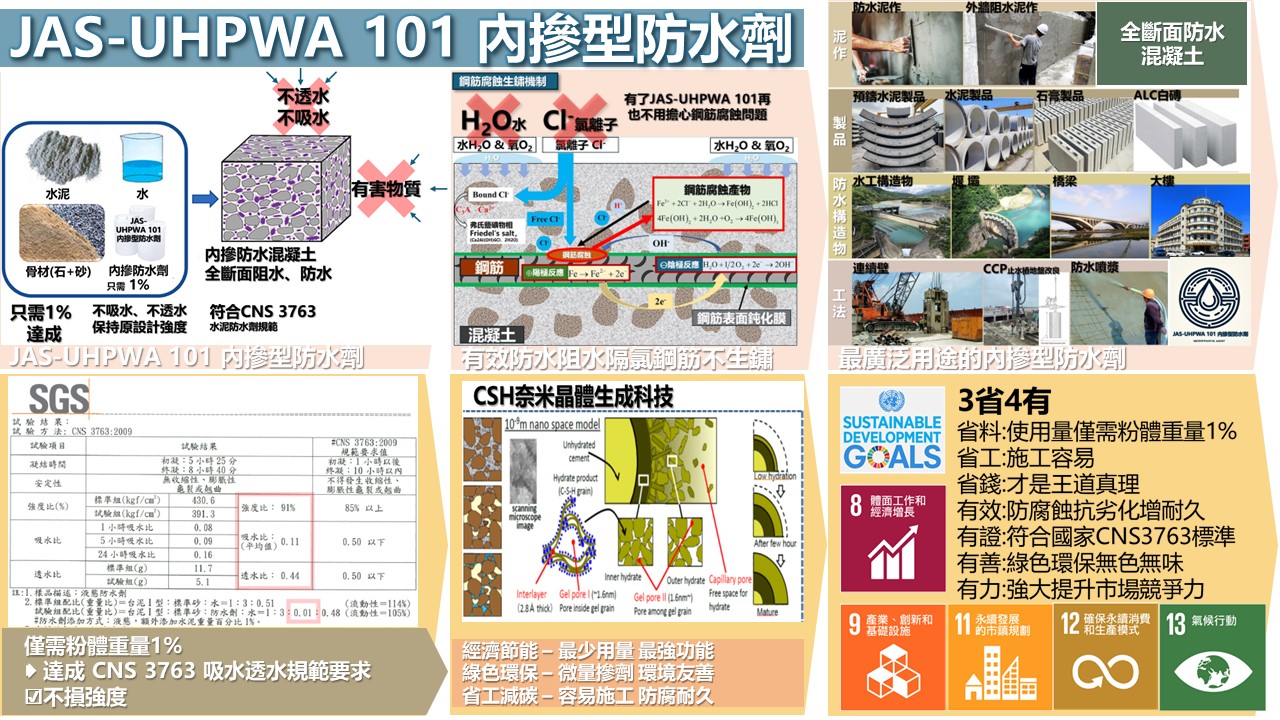
Core I: JAS-UHPWA-101 Integral Waterproofing Admixture
Function
A “vaccine” for concrete, providing full cross-section waterproofing and corrosion resistance.
Labor Shortage & ESG Advantages
Labor-Saving:
Added directly to ready-mix concrete during batching, eliminating the need for on-site waterproofing crews.
Time-Saving:
Becomes effective immediately without waiting for concrete curing or drying.
Carbon Reduction:
Extends building service life and significantly reduces carbon emissions associated with repairs and reconstruction.
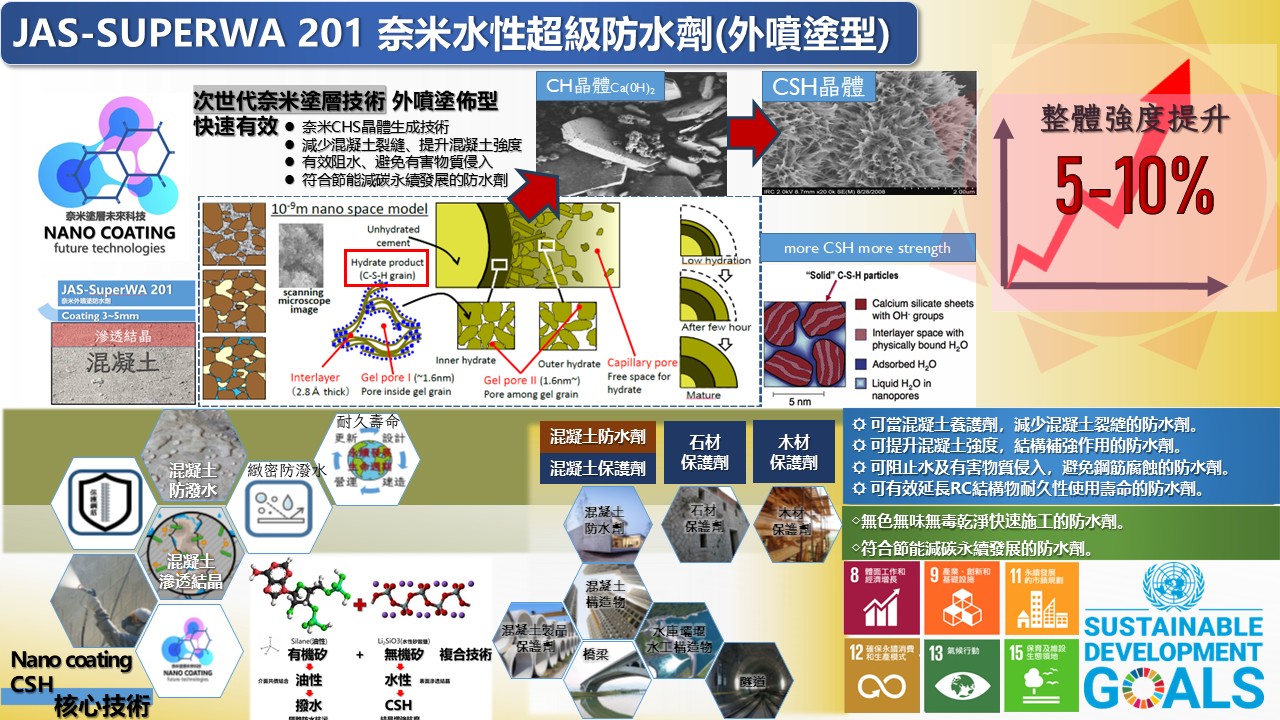
Core II: JAS-SUPERWA-201 Nano Water-Based Super Waterproofing Solution
Function
An “invisible raincoat” for concrete, delivering penetrating crystallization and surface densification.
Labor Shortage & ESG Advantages
Rapid Application:
High-efficiency spraying enables fast coverage of large surface areas.
Strength Enhancement:
Increases concrete surface strength by approximately 5–10%.
Health & Safety:
Water-based and non-toxic, free from formaldehyde and heavy metals.
5. Why Leading Architects Choose JAS? (Why JAS?)
Comparison Criteria:Traditional Membrane Waterproofing vs. JAS Structural Durability System
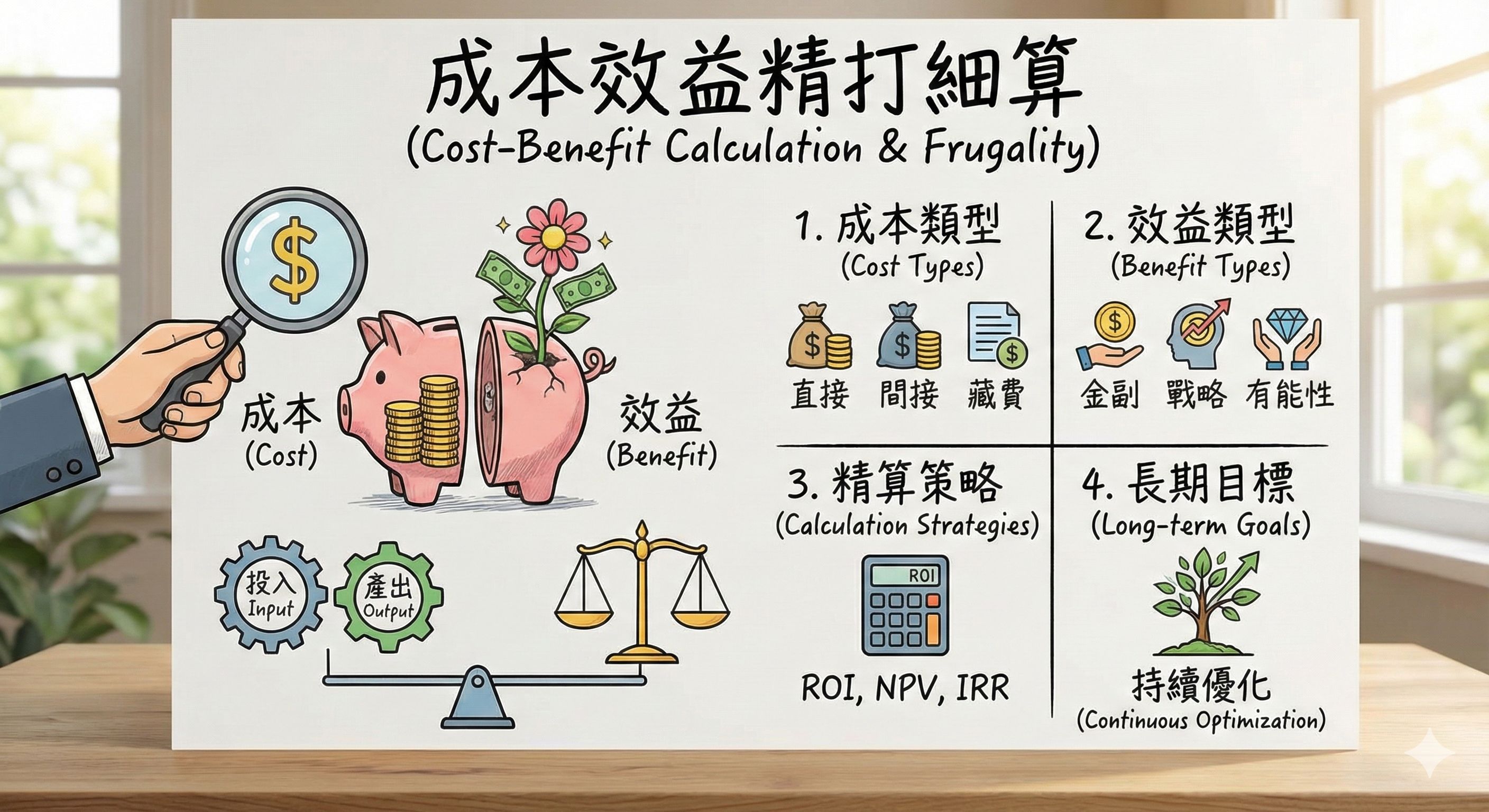
How it Works
Overall Benefits: Labor-Saving, Time-Efficient, Lowest Carbon Footprint, and Maximum Durability.Construction Speed:
Traditional: Slow, highly dependent on skilled workmanship
JAS: Automated (integral admixture 101) + rapid spray application (201)
Risk Management:
Traditional: Single-layer failure leads directly to water leakage
JAS: BS 8102 Type A + Type B dual-layer redundancy
ESG & Carbon Reduction:
Traditional: Deteriorates within 3–5 years, requiring reapplication
JAS: Designed to last for the entire service life of the structure, maintenance-free